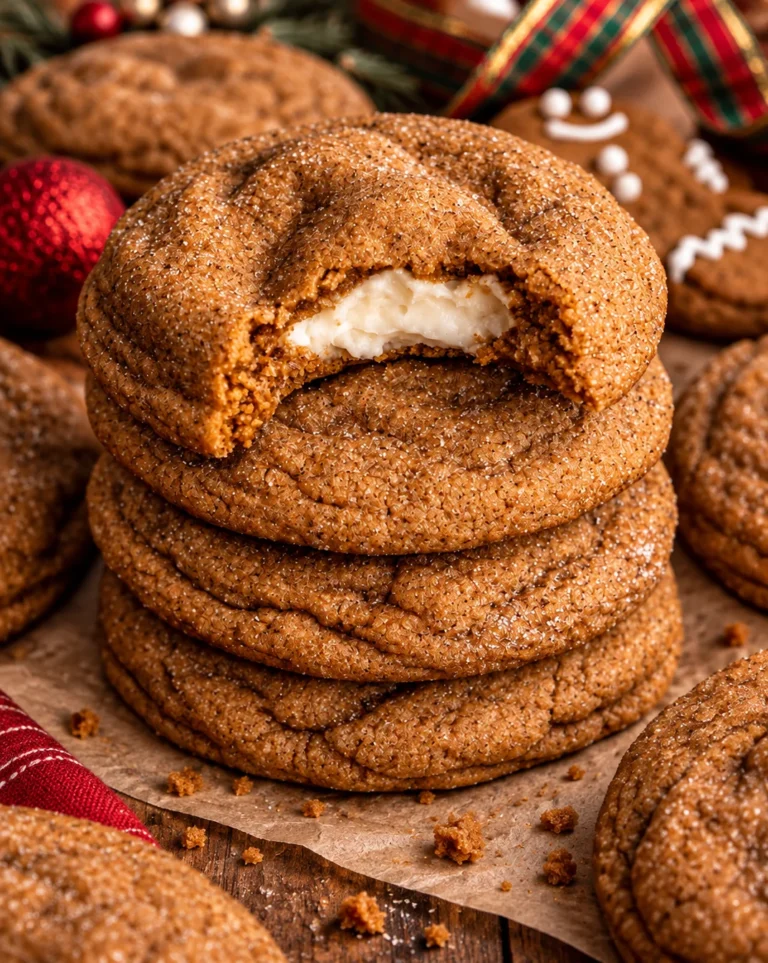

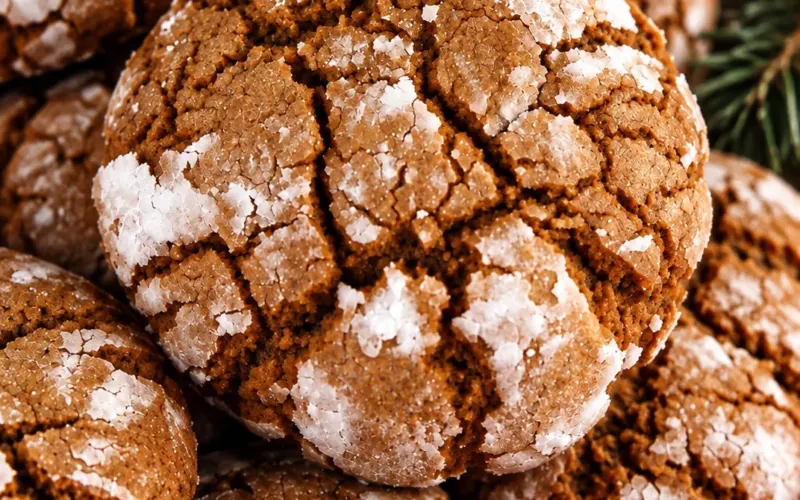
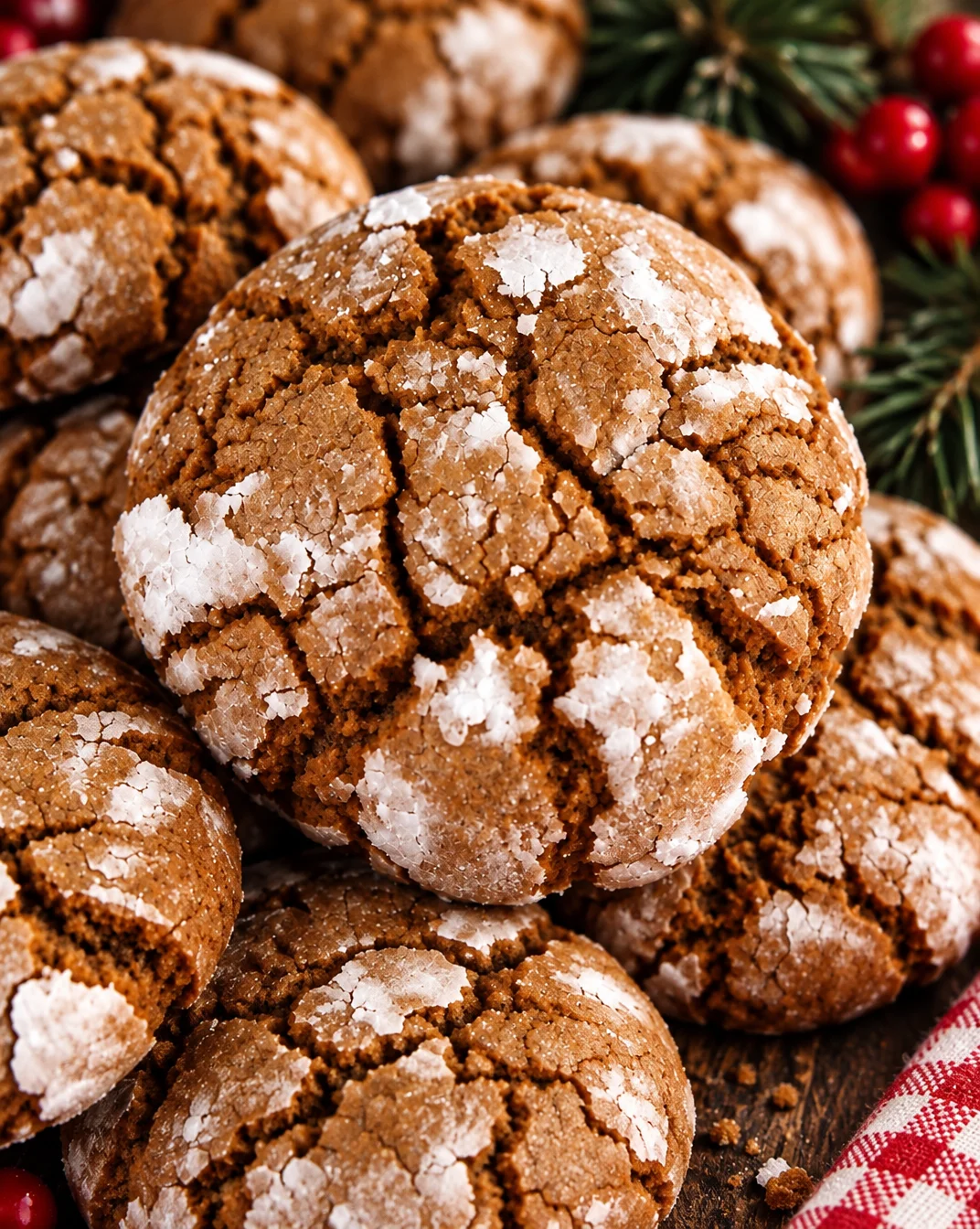
Gingerbread Crinkle Cookies are soft, warmly spiced, and covered in a snowy coating of powdered sugar that cracks beautifully as they bake. These festive cookies bring together the cozy flavors of molasses, ginger, cinnamon, and cloves in a treat that is perfect for holiday cookie trays, gifting, or enjoying with a hot cup of coffee.
Why Make This Recipe
- Full of holiday flavor: Ginger, cinnamon, cloves, and molasses create a rich, fragrant gingerbread taste.
- Beautifully festive: The powdered sugar coating forms a dramatic crinkle pattern as the cookies spread in the oven.
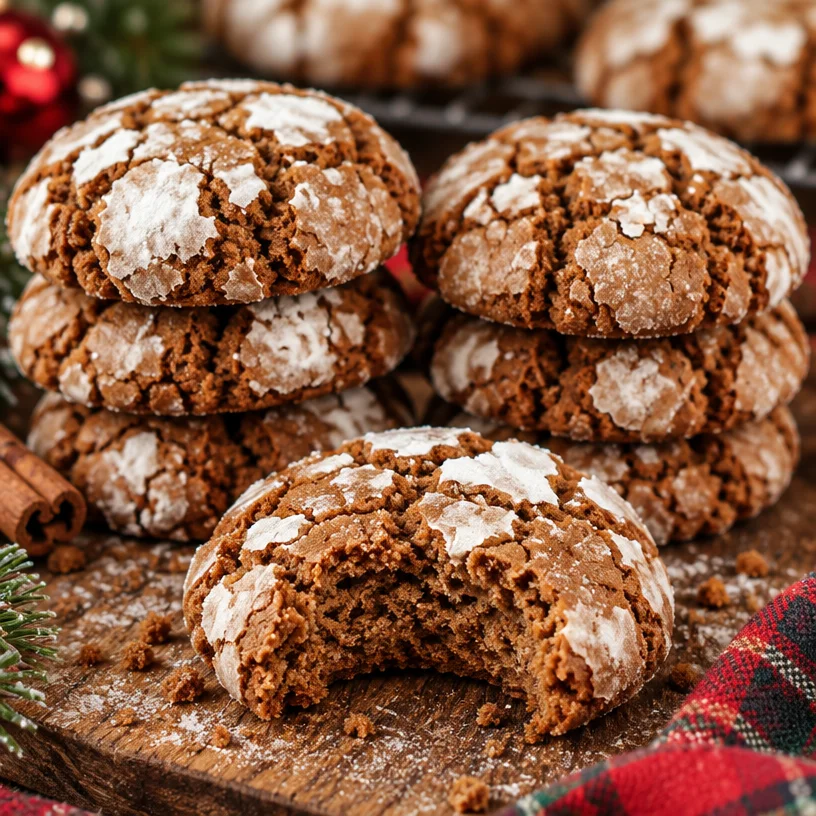
- Soft and chewy: The centers stay tender while the edges develop a delicate, slightly crisp texture.
- Easy to share: These cookies travel well and make a lovely addition to dessert platters, cookie exchanges, and edible gifts.
Ingredients
- All-purpose flour
- Baking powder
- Baking soda
- Ground ginger
- Ground cinnamon
- Ground cloves
- Salt
- Unsalted butter, softened
- Brown sugar
- Granulated sugar
- Molasses
- Large egg
- Vanilla extract
- Powdered sugar, for coating
Use regular unsulphured molasses for the best balance of sweetness and spice. Avoid blackstrap molasses, which can taste intensely bitter in cookies.
How to Make It
Prepare the baking sheets. Line one or two baking sheets with parchment paper or silicone baking mats. This helps prevent sticking and encourages even browning.

Mix the dry ingredients. In a medium bowl, whisk together the flour, baking powder, baking soda, ginger, cinnamon, cloves, and salt. Set the mixture aside.
Cream the butter and sugars. In a large bowl, beat the softened butter with the brown sugar and granulated sugar until light and creamy. Scrape down the sides of the bowl as needed.

Add the wet ingredients. Beat in the molasses, egg, and vanilla extract until the mixture is smooth and well combined.
Combine the dough. Gradually add the dry ingredients to the wet mixture, mixing just until no dry streaks remain. Avoid overmixing, which can make the cookies firm instead of tender.
Chill the dough. Cover the bowl and refrigerate the dough until it is firm enough to scoop and shape. Chilling helps prevent excessive spreading and makes the dough easier to handle.
Shape the cookies. Scoop portions of dough and roll them into smooth balls. Coat each ball generously in powdered sugar so the surface is completely covered.
Arrange on the baking sheets. Place the coated dough balls several inches apart to give them room to spread.
Bake. Bake until the cookies are puffed, cracked, and just set around the edges. The centers may still look slightly soft, which helps them remain chewy as they cool.
Cool completely. Let the cookies rest on the baking sheet briefly, then transfer them to a wire rack. They will continue to set as they cool.
How to Serve It
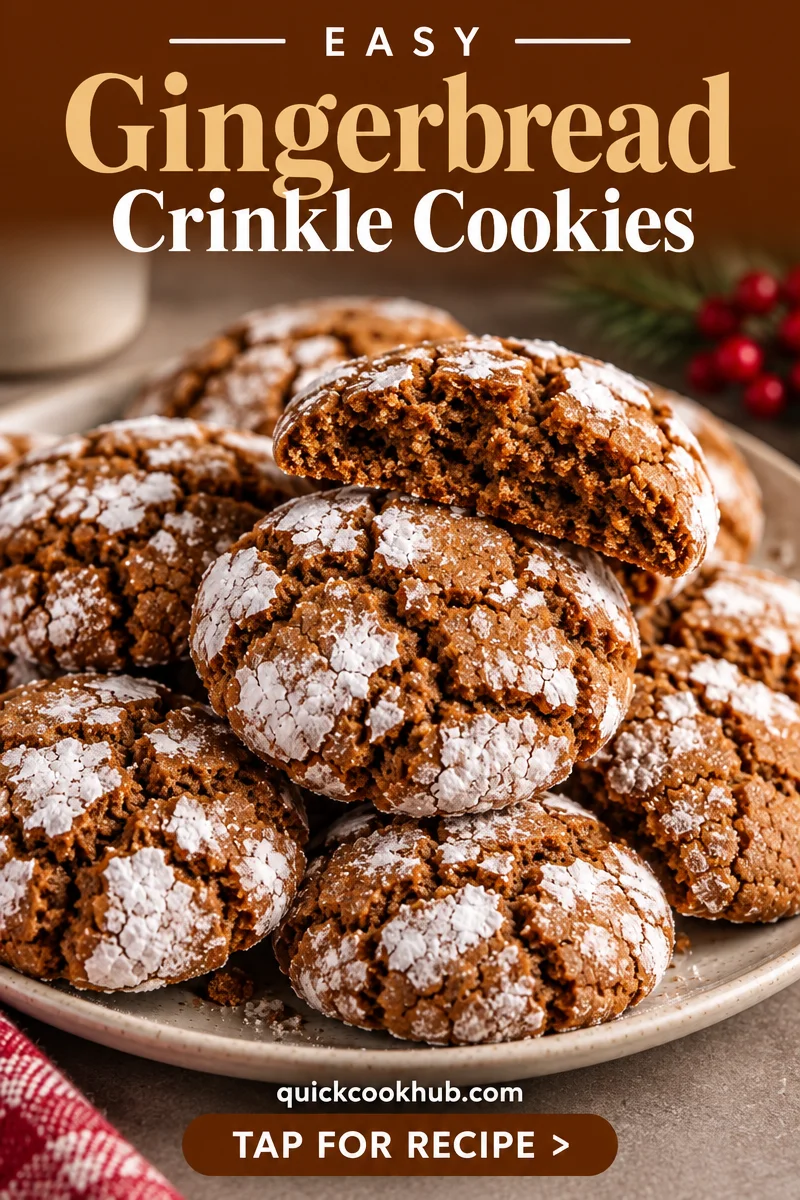
- Serve the cookies with coffee, tea, hot chocolate, or warm spiced cider.
- Arrange them on a holiday dessert platter with shortbread, sugar cookies, and chocolate treats.
- Add a final dusting of powdered sugar just before serving for an extra snowy finish.
- Package cooled cookies in a parchment-lined tin or gift box for a festive homemade present.
How to Store It
Store cooled cookies in an airtight container at room temperature for several days. Place parchment paper between layers if you want to protect the powdered sugar coating.
For longer storage, freeze the baked cookies in a freezer-safe container for up to several months. Thaw them at room temperature before serving. You can also freeze shaped, unbaked dough balls; coat them in powdered sugar just before baking, and add a little extra baking time if baking directly from frozen.
These cookies are best enjoyed at room temperature. If you prefer them slightly warm, heat one briefly in the microwave, taking care not to overheat it and dry out the center.
Helpful Tips
Measure the flour carefully. Too much flour can make the cookies dry. Spoon it into a measuring cup and level the top, or weigh it for the most accurate result.
Do not skip chilling. Cold dough is easier to roll and helps the cookies keep their shape while baking.
Use plenty of powdered sugar. A generous coating creates the signature crinkle appearance. If the coating looks thin before baking, roll the dough balls again.
Avoid overbaking. Remove the cookies when the edges are set but the centers still look soft. They will firm up as they cool.
Leave space between cookies. Crowded baking sheets can cause the cookies to merge and may prevent them from baking evenly.
Optional Variations
- Add orange flavor: Mix a little finely grated orange zest into the dough for a bright contrast to the warm spices.
- Use a spice blend: Replace some of the individual spices with pumpkin pie spice or a favorite gingerbread spice blend.
- Add chocolate: Fold in finely chopped dark chocolate or chocolate chips for a richer cookie.
- Increase the heat: Add a pinch of freshly ground black pepper or a small amount of cayenne for a subtle spicy finish.
- Make them extra festive: Add a light drizzle of white chocolate after the cookies cool completely.
Frequently Asked Questions
Why did my gingerbread crinkle cookies not crack?
The dough may not have been chilled enough, or the powdered sugar coating may have been too light. Make sure the dough is firm and coat each ball generously before baking.
Can I make the dough ahead of time?
Yes. Cover and refrigerate the dough for a day or two before baking. Let it soften slightly if it becomes too firm to scoop.
Can I freeze gingerbread crinkle cookie dough?
Yes. Shape the dough into balls and freeze them on a tray before transferring them to a freezer-safe container. Roll the frozen dough in powdered sugar just before baking.
Why are my cookies spreading too much?
The butter may have been too warm, or the dough may not have chilled long enough. Chill the shaped dough balls briefly before baking if necessary.
How do I keep the powdered sugar bright and visible?
Coat the dough heavily and avoid storing the cookies while they are still warm. Once completely cool, keep them in a dry, airtight container.